
Spring Snapshots
Night Night Fawn, Proust, Bojack Horseman, and Castration Movie Anthology I: Traps.

I have a new essay published in The Metropolitan Review, Submerged Populations vs. Representation, in which I review two recent short story collections from transmasculine authors and work through thorny questions about how we discuss literature from marginalized groups. In the essay, I write about how I prefer Frank O’Connor’s theory of the short story writer’s “submerged population” to the discourse of representation; if you’re curious about Frank O’Connor, I’ve written about his short stories and the craft in his opening lines here.
Has Syracuse’s long winter finally run its course? This last winter was especially hard and endless-seeming, with snow and freezing rain following us to the beginning of May. But now, finally, there are signs of a spring that won’t quit. This means the occasional day in the 80s, with many temperate days still surrounding the swelter, with less of the torrential rain (and infrequent snow) than we got for all the past two months. As ready as I am for real summer, I’m still so happy to see blue skies that I can forgive the fact that I still, occasionally, need a light jacket to be outside. I can almost believe that soon it will be time to wear shorts every day.
I’ve been out of school for a month, and the time I have on my hands feels limitless, though this month has flown by and I know the next three months will pass in seconds. With all this free time, my brain has felt languid and elastic and a little empty. I’ve been spending a lot of time touching grass, taking the dog on long walks. I’ve been reading out on the porch. I’ve been going on hikes and planning trips. I’ve been writing, but I recently finished the first draft of my novel, so now my writing time is spent re-reading and revising.
I am planning a trip to Little Rock and the Ozarks in July to do research for my novel. This is terrifying, mostly because I have little confidence in my research abilities, so I’m terrified that I’ll get down there and not have the skills to find out what I need. It’s also scary because it’s an act of faith in my novel, of believing that this pile of words I’m sitting on is worth the expense of this trip. Revising this pile of words has me freshly unsatisfied with the existing draft, and it’s hard to see the good version of this draft somewhere in the future. Is it “worth it” to spend all this money on research, for a project that often still feels tenuous? I’ve decided on yes, but it does feel like a gamble.
I’ve been laser-focused on this novel, and it’s been tough to pull my head out of my novel and think about essay-writing. So I thought for this post I would do snapshots of media I’ve enjoyed lately.
Night Night Fawn
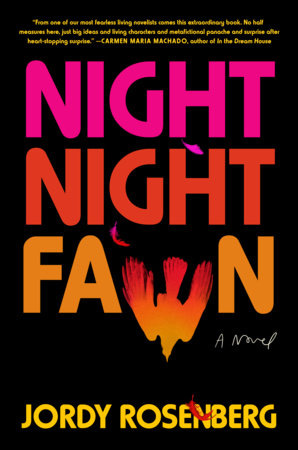
I recently finished Night Night Fawn by Jordy Rosenberg, a gorgeously spiteful head trip of a novel. Its protagonist is Barbara Rosenberg, a homophobic, transphobic, Zionist yenta in Manhattan, who’s writing her memoirs as she dies in the care of her trans son. She has been estranged from her son for decades prior, and still does not accept his gender, thinking of him as her daughter; she’s also estranged from her former best friend, Sugar, a writer and actress who has achieved the success in showbiz that Barbara once dreamed of. She’s subject to hallucinations from Oxyconton, and thus believes that her son has been transformed into a giant bird.
The delight of this novel lies in occupying Barbara’s villainous and psychedelic POV, as we’re invited into her noxious opinions on everything from plastic surgery to Israel to Marxism to transness and dykehood. Barbara seduces the reader like every good villain should, and though the reader empathizes with her, she’s unsympathetic and unlikable.
Through its unflinching examination of Barbara’s values, Night Night Fawn elucidates why such a value system is fascistic, without ever feeling didactic or preachy. The prose is lush and raunchy and funny, with Barbara’s unique voice guiding us through her Jewish milieu over many decades. Addressing her trans son, whom she previously envisioned as a bird: “You, meanwhile, were acting like everything was normal. Your nose looked more nose-like again. Maybe it had retracted like a flaccid penis back into your regular nose.”
Proust
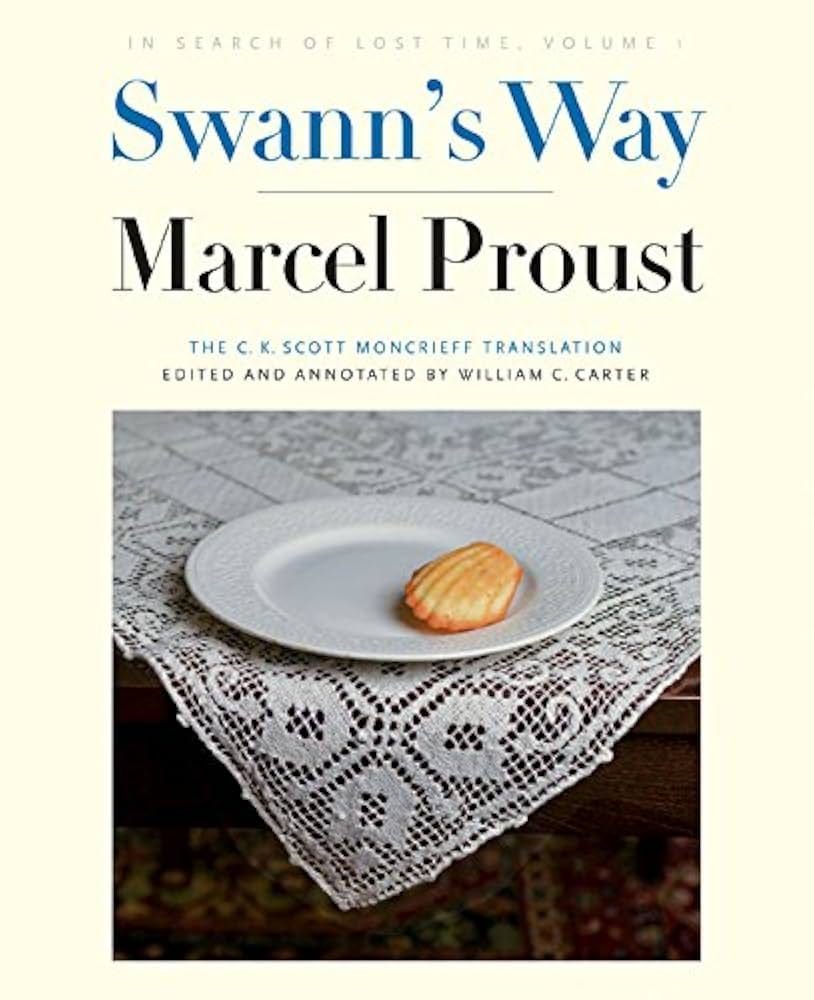
I am in the middle of reading Proust’s In Search of Lost Time–or rather, I’m in the middle of Swann’s Way, and I hope I’ll have the momentum to read the other volumes next. Reading Proust is transformative, as everyone always told me it would be, but I wasn’t prepared for the density of his sentences, the way they curve around each other and explode into newness. I’m having to read so many of these knotty sentences multiple times, but I love it.
Proust can get paragraphs out of the smallest detail, such as the smell of hawthorn flowers. He digs into these details with the kind of relish you can’t help but get swept up in, expounding with seemingly infinite clauses about the tiniest recollection. When I first started reading I found this level of attention to detail exasperating, but once you get into its groove Proust’s way with details acts as a kind of narrative momentum. So far, there’s not much in the way of “plot” in this book, so much as a slow meandering through this narrator’s memories. But the meandering is the point. Slowing down with these details is the point. What keeps me reading is not plot but a curiosity to see how he’ll describe the next small moment. I feel like I’ve never explored a literary world as thoroughly or as intimately as I’ve been exploring this narrator’s childhood in Combray.
100 pages in, and very little has happened so far, yet it feels like everything is happening all at once because of this novel’s strange relationship to time. The past overlies the present, the past mixes with the present like an oil spill glimmering into water. It’s impossible, reading this book, to not think about my own relationship to nostalgia, my longings to recapture past places even as I’m glad I left them. When you’re wallowing in nostalgia, your longing feels singular, but few feelings tie humans together more than our mutual nostalgia.
I don’t have intense longing for the scenes of my childhood, like Proust’s narrator does for his years in Combray, but I do have nostalgia for the setting of my twenties: Carrboro, North Carolina, a nostalgia which I’ve written about before. Every passing minute makes those years vaguer in my mind, my memory letting me down, and I fear the coming day when it all fades, when I don’t remember my youth in technicolor. I’ve always felt a bit embarrassed at the depth of my feeling for the place where I spent most of my twenties, as if it’s a character flaw, as if closure exists for this place and this time but I am too blind to find it. Surely if I were more mature, more okay with aging, then I wouldn’t feel anxious at the thought of time relentlessly taking me further from the 2010s.
But reading Proust makes me feel that it’s okay, that in fact it’s universal, to be nostalgic. Here is a narrator that can’t let go of a single moment from his past, a narrator who tastes a madeleine and invites the way it transports him back in time. In Proust, the past is accessible, not another country that can’t be visited but visceral and alive in our subsumed memories, available to us through the senses that lie in wait to take us back there.
“But, when from a long-distant past nothing subsists, after the people are dead, after the things are broken and scattered, still, alone, more fragile, but with more vitality, more unsubstantial, more persistent, more faithful, the smell and taste of things remain poised a long time, like souls, remembering, waiting, hoping on the ruins of all the rest, bearing without faltering, on the tiny and almost impalpable drop of their essence, the vast structure of memory.”
Bojack Horseman
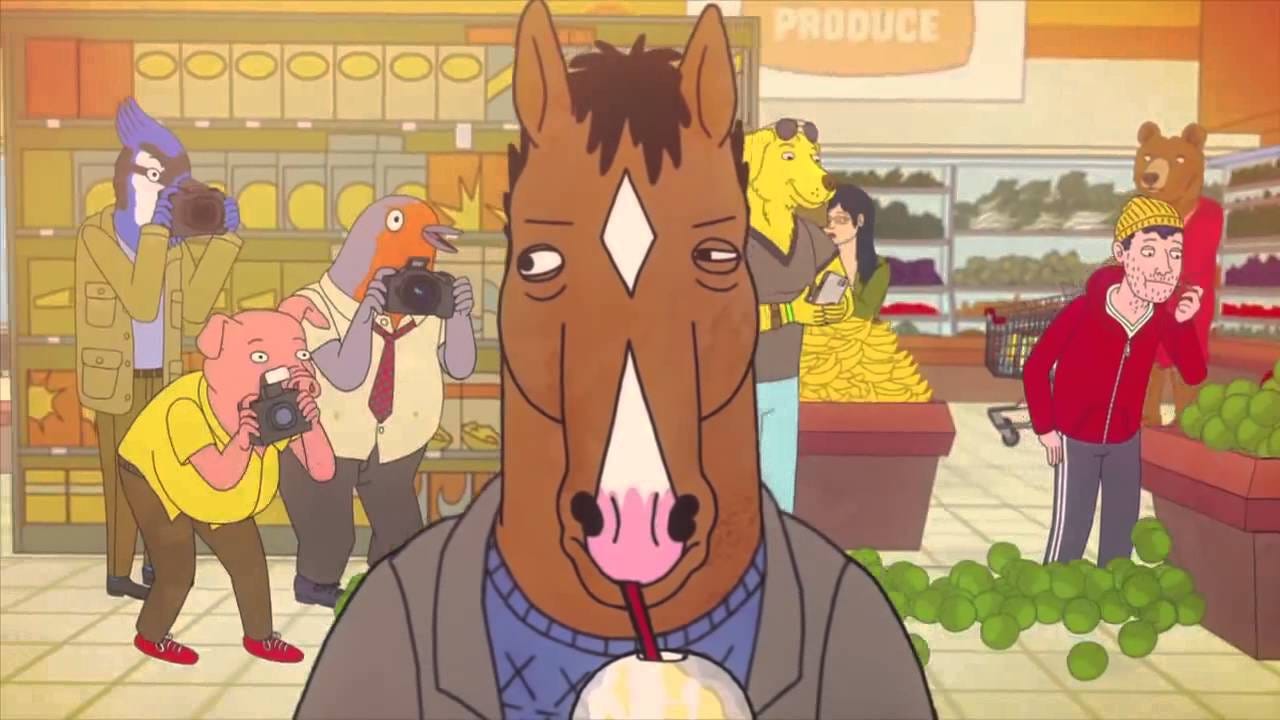
Another nostalgia trigger: I’ve been rewatching Bojack Horseman. I first binged this show in winter 2020, right before the pandemic, and it’s surreal to realize that it’s been long enough since that time that I can go back to media I watched then and experience it fresh. So it’s a double-whammy of nostalgia: it reminds me of early 2020 (Agata and I watched it together when she was still my fiancé, not yet my wife), and it reminds me of the 2010s, because it’s certainly a relic of that era.
The show centers the psychological troubles of a problematic man, a formula that’s reminiscent of the “Tortured Man” shows that defined the Golden Age of TV, on the decline when Bojack Horseman started airing in 2014. Although the show is a comedy starring a cartoon horse, its narrative shape would recall Breaking Bad even if Aaron Paul wasn’t involved. Like Breaking Bad, it’s about a selfish, fucked-up middle-aged man who sucks everyone around him into his drama, and though it never leaves humor far behind, the ramifications of Bojack’s depression and narcissism are taken seriously.
Bojack traverses the dividing line between the uncaring 00s and when our culture began taking identity politics and “wokeness” more seriously, and is thus an interesting time capsule back to the 2010s. It has anti-wokeness baked into it–characters of color are voiced by white actors, and the ethnicities of these characters, when they’re brought up at all, are played for humor in the first season–but the show was always interested in questions of gender and sexuality. A main storyline in the second season involves the repercussions of Diane speaking out about a talk show host’s allegations of sexual abuse. Airing in 2015, it’s an interesting precursor to #MeToo and the issues that would dominate our cultural landscape a few short years later. Watching it takes me back to Tumblr feminism and reading Roxane Gay, the years when it felt like feminism was bubbling up beneath our culture and the seeds of change were being planted. Yet the storyline concludes with Diane having a fight with her husband, Mr. Peanutbutter, a fight which centers his feelings and lays the blame for her unwanted publicity on Diane. The show was circling closer to the feminist ideology that it would embrace in later, post-#MeToo seasons, but it hadn’t quite gotten there yet.
Castration Movie Anthology I: Traps
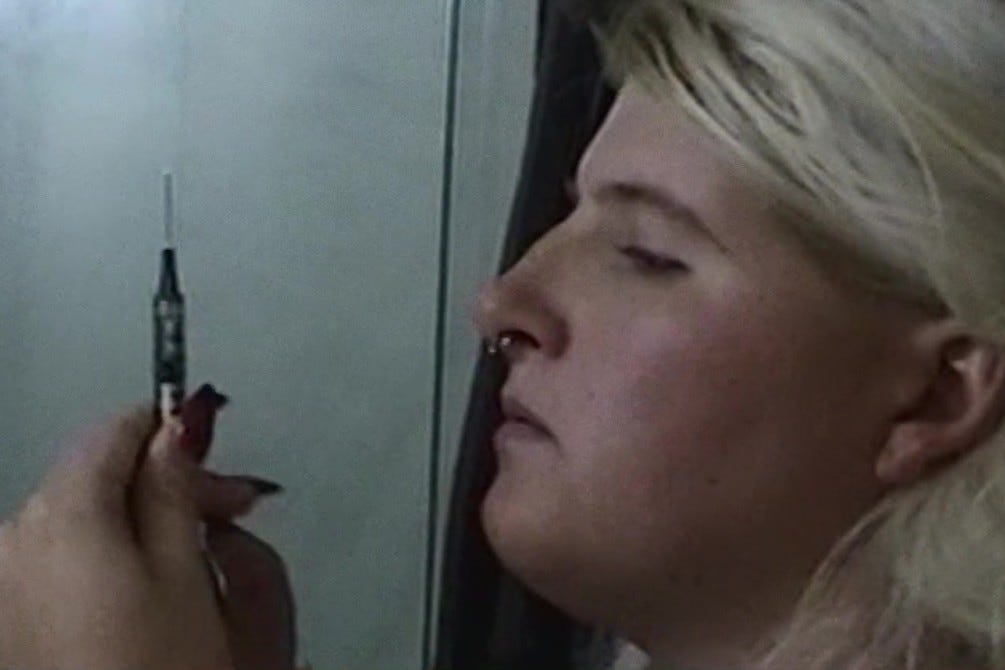
This is a hard title to bring up in casual conversation, yet I’ve been trying to recommend it to everyone. Beyond the provocative title, it’s a hard sell to recommend a movie that’s 4 hours long. Nevertheless, I persist, because this movie is amazing and it should be more widely seen.
As the title suggests, it’s the first part of a longer project (Part 2 has been released, but I haven’t had the chance to see it yet) from trans indie filmmaker Louise Weard. It combines documentary and documentary-like footage with long and intimate scenes of arguments and group hangouts, all shot on a grainy Hi8 camcorder. Traps is split into two parts: the first part, “Incel Superman,” follows Turner, a down-on-his-luck production assistant in Vancouver, as he goes through a tortuous breakup and travels down the rabbit hole to inceldom. It asks the viewer to empathize with the kind of person from whom we’d usually retract our empathy. It’s hard to watch–Weard lets her scenes extend for what feels like too long, making these breakup fights agonizing to watch, and with the grainy footage it feels like you’re watching someone’s home video. The overall effect turns the characters painfully real, and it’s unpleasant to be invited into real people’s screaming fights and terrible decisions.
The second part, “Traps Swan Princess,” is three hours long and invites you into the world of Michaela (nicknamed Traps), a trans sex worker also in Vancouver. Michaela is, to put it mildly, not a likable protagonist. She bullies her friends and she’s locked into her own bullshit, and she pines for a man she calls her boyfriend who’s clearly not that into her. She has a right-wing past that the movie reveals slowly, as the parallels between her and Turner become evident. The movie shows a deep understanding of the internet generally and 4chan specifically, and the way these online spaces can be occasionally redemptive, but also addictive, radicalizing, and harmful.
Traps takes us close to its characters in a way that feels unprecedented. The camera candidly follows the daily lives of Michaela and her trans friends, showing unsimulated sex, unsimulated golden showers, and even, amazingly, documentary footage of a real top surgery and the patient’s real recovery from said top surgery. But despite the scenes that one could list off for shock value, where the movie really shines is its depiction of Michaela’s social world. There are so many scenes of trans people just hanging out, having conversations that are sometimes hilarious (there is an incredible argument over someone having not-read Dune), sometimes deeply painful, and often painfully sincere. We get to know these characters’ financial precarity, the transphobia that pricks them on a daily basis, but also their deep connections with one another and their loyalty. My deepest goal as a writer is to write the kind of trans dialogue that overflows from this movie. It’s real, and it’s funny, and it’s sweet. Despite the runtime, it rarely feels slow or overstuffed, and I wouldn’t wish it to be a second shorter.
In interviews, Weard has said that many of her influences were literary, from Gravity’s Rainbow to Casey Plett, and you can feel that literary influence in the movie–it’s literary in scope. (And I don’t know if this was an influence on Weard, but it reminds me of Rejection by Tony Tulathimutte in the best way.) It’s a masterclass in writing dialogue and it feels like a magnum opus, like a great 500-page novel. If you’re at all a fan of independent cinema or trans cinema or trans literature or, hell, just literature in general, you don’t want to miss this one.